What Texas' 2024 and 2025 transfer efforts and shortcomings tell us about the 2026 portal cycle
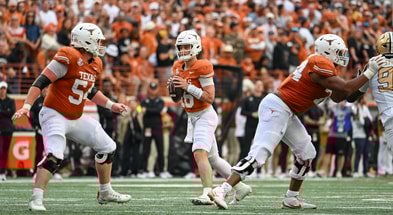
Texas has lost six games over the last two seasons, good for a record of 23–6 with a CFP semifinal appearance and an undefeated record in rivalry games.
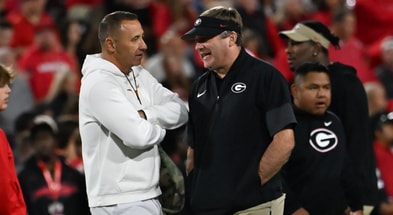
Losses came against just three teams in that span: three games against the back-to-back SEC champions in Georgia and two to an Ohio State program that won the title in 2024 and went undefeated in the regular season in 2025. The other was to an underachieving Florida team in Gainesville.
Still, expectations surrounding this team are higher than three-loss seasons. Given the amount of money and talent circulating through these rosters and staffs, this team is clearly expected to compete for a national championship year in and year out.
Texas is showing that willingness to build for a national title with the transfer portal class they’ve brought in. The Longhorns have allowed lower-level starters and rotational players to walk in favor of adding top-tier talent at positions of need in the portal. Yes, there are still needs. Time remains to address those needs.
Texas signed the best non-QB in the cycle in WR Cam Coleman, alongside four other top-50 transfers.
But Texas has done well in the portal in the past, and it has built rosters with talent composites in the top five over the past two years. And yet, the Longhorns are still chasing that elusive SEC championship win and national title appearance.
After all the work that’s been done in the portal with more yet to do, a clear question that must be asked is whether Texas has done enough to right its wrongs from the past season.
Let’s look into it.
2024
Texas was a fantastic team this season, but it had a few clear problems.
There are four games to really look into for this case:
30-15 loss vs. Georgia in Week 8
22-19 loss vs. Georgia in the SEC Championship Game
39–31 OT win vs. Arizona State in the CFP Quarterfinal
28-14 loss vs. Ohio State in the CFP Semifinal
The first Georgia game was a complete disaster for this team, so it’s hard to pin singular pieces of blame. Still, the themes that showed up in Week 8 came back to haunt Texas late in the season. We can find three clear problems with the 2024 team:
- Texas was outdueled in the run game against top teams.
- The Longhorns didn’t have two reliable receivers throughout the season.
- The special teams had clear weaknesses in the late part of the season.
The Longhorn RBs averaged 54 yards per game on 2.7 yards per carry in these four games. Opposing RBs averaged 120 yards per game on 4.9 yards per carry. Texas was completely outmatched on the ground. They couldn’t run on offense, and the defense struggled to contain the likes of Trevor Etienne and Cam Skattebo when stops were needed.
Texas also struggled at the WR spot. While DeAndre Moore gave Texas a great performance in the SECCG, WRs not named Matthew Golden combined for just 86 yards per game in these four matchups. Golden, on his own, accounted for 110, and that was with injury problems against the Buckeyes.
Lastly, Texas was lapped in the special teams portion of the game. The Longhorns would’ve likely won the SEC Championship if not for two missed field goals in regulation. Texas was unable to flip the field on punts, and both Georgia and Arizona State took advantage of trick plays to earn extra possessions late in the season. It was clearly the worst of the three phases for the Longhorns.
Were these problems that could’ve been addressed through the portal? I’d argue no. Texas believed it was entering this season with a fantastic group of skill players, but injuries to CJ Baxter and Christian Clark set back the RB room, and Isaiah Bond never lived up to his WR1 portal status from the offseason.
2025
Many of you are tired of hearing about the woes of 2025 and the number of disappointing games. Three losses, two OT games against bottom-five SEC teams, and no playoffs.
Texas’ biggest problem in 2025 was clearly on the offensive line, specifically at left guard. It was a revolving-door disaster from Week 1 until the final few games of the season, and at that point, it was just too late.
But more problems reared their ugly heads than just interior ineptitude.
Texas once again couldn’t run the ball, averaging 3.8 yards per carry on just 15 attempts per game for RBs in losses. It was heightened even more in 2025 with the departure of Jaydon Blue, who added some juice in the passing game. Texas struggled to get RBs into open space from start to finish.
They also failed to find rhythm with receivers. No pass catcher really emerged as a No. 1, and the Longhorns were credited with 22 drops on the season, many of which came in critical moments of the OSU and Georgia games. Ryan Wingo was Texas’ best, but he wasn’t nearly as impactful as Golden, and he was responsible for 31% of the team’s drops. No other receiver had over 550 yards on the season.
Special teams had its struggles, especially with penalties, kick coverage, and the onside kick lost against Georgia, but this year the defense did not play up to the standard set in 2024.
Texas played a great game on that side of the ball to begin the year, but in the last six games, the Horns allowed 31 points per game. The story of failure wasn’t in the run game; it was poor game plans and paltry pass defense.
Texas had the completely incorrect scheme against Florida in the loss. The Gators ran at will, and the Longhorns opted to spy a hobbled DJ Lagway instead of pressuring the inexperienced QB. They also opted for heavy man coverage without Malik Muhammad against young receivers with little production but a boatload of athleticism.
Against Georgia, Texas had multiple coverage busts and wasn’t prepared to stop the screen and short passing game. Mississippi State and Vanderbilt each threw for over 350 passing yards, finding receivers open both in front of sagging DBs and behind the defense on blown coverages.
A lot of the problems Texas had in 2025 did come from poor roster construction. Texas didn’t take but just one WR or and stood pat at RB in the portal, even with the positions getting thinner and thinner after the 2024 season. The Horns clearly needed another guard, and maybe two interior offensive linemen.
- 1

Ed Orgeron returns to LSU on Lane Kiffin's staff
- 2

Judge recused in Brendan Sorsby eligibility case
- 3
 New
NewAhmad Hardy speaks on rehab, Mizzou return after shooting
- 4

Lane Kiffin reveals NFL-like 'fine system' for players
- 5

Bryce Underwood back for Round 2
Get the On3 Top 10 Newsletter in your inbox every morning
By clicking "Subscribe to Newsletter", I agree to On3's Privacy Notice, Terms, and use of my personal information described therein.
Heading into 2026
What stands out from these two years?
In both seasons, Texas didn’t have the skill position players to overcome the Georgias and Ohio States of the world.
Instead of running it back in 2026, Texas traded familiar faces like Quintrevion Wisner, Baxter, Parker Livingstone, and Moore for Hollywood Smothers, Raleek Brown, and Coleman.
They’ve clearly done enough in the portal at RB and WR, while also adding a potential starting TE in Michael Masunas.
Smothers and Brown are the best RB duo Texas has potentially had since Bijan Robinson was in town. It’s a clear upgrade from both 2024 and 2025—two backs with good speed and tackle-shedding ability. It’s also expected to be a deeper room overall, with fewer injury concerns while still having talent from younger pieces.
Coleman and Wingo now form what many hope to be the best duo of outside receivers Texas has had since Xavier Worthy and Adonai Mitchell in 2023.
Coleman and Wingo do have drop problems they’ll need to figure out, but from a talent standpoint, this is a dangerous duo of outside pass catchers. Those two, alongside Brown and Smothers, now give Texas better options to score in the red zone, another multi-year problem.
Looking elsewhere, Texas made a big shift defensively. They fired Pete Kwiatkowski and brought in Will Muschamp. This solves two issues. One, Kwiatkowski’s poor game plans in 2025 were a leading cause of the loss to Florida and kept teams like Vanderbilt and Mississippi State in games.
Secondly, Muschamp will allow Texas to prepare better for Georgia and brings more physicality and aggressiveness to that side of the ball.
This will hopefully solve the woes in run defense in 2024 and the problems in 2025. Texas added good run stoppers like Rasheem Biles and Ian Geffrard in the portal. They added a DB in Bo Mascoe while retaining strong talent. Mascoe is a great scheme fit for Muschamp and proves they’re looking to press more and not allow receivers to run freely down the field.
But Texas hasn’t been perfect.
The interior offensive line is once again a big question mark. If the season started tomorrow, IT would be concerned about who is playing one of the guard spots. Who is the backup center? How solid are any of the interior starting offensive line positions?
Special teams did take a noticeable step forward in 2025, especially with the return game, but penalties and the onside kick against Georgia stood out. Jeff Banks works closely with Steve Sarkisian and has done positive work for this program, but it would leave a sour taste in fans’ mouths if Texas lost games because of special teams problems three years in a row.
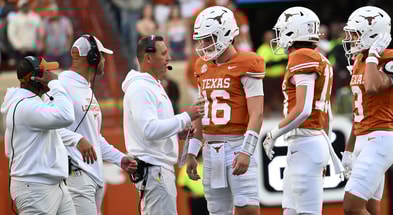
Overall, though, Texas has put in the work to make sure many of these past problems will be fixed. They are much, much more talented at skill positions. The defensive side of the ball is getting a complete revamp with a coach many are excited for. Manning is expected to have the best QB season of the last three years and now knows what it takes to beat an Ohio State, Georgia, or a team like LSU, which Texas plays on the road in 2026.
The offensive line still is concerning. The linebacker corps may be a little thin, especially in finding a true Mike in the middle of the field. Special teams problems always loom. If Texas does fail to reach the peaks of the sport with the roster it’s assembled this offseason, it will be because of these issues.
But when you look at what has plagued Texas in the past, and then you look back at the types of players Texas has added in the portal, it’s hard not to get excited about the potential of righting these wrongs and playing 12 complete games of football in the 2026 regular season.