'We want to invest into people who love football': Texas GM Brandon Harris explains roster building process with Adrian Wojnarowski
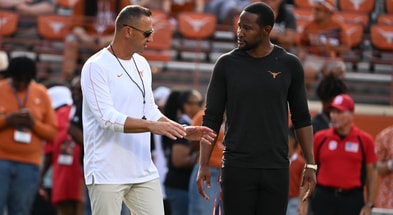
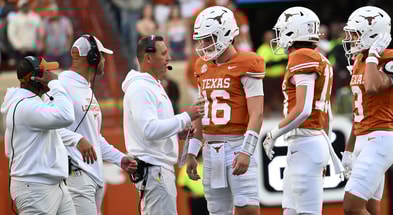
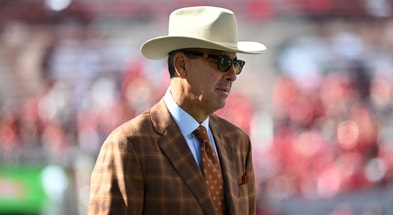
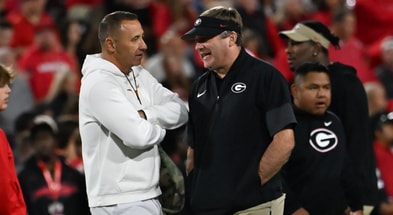
In a newly released episode of his podcast ‘The Program’, former NBA reporter and insider Adrian Wojnarowski sat down with Brandon Harris, Texas Football’s general manager, to talk about the behind-the-scenes processes of building a national title contender.
[Sign up for Inside Texas for $1 and get THREE MONTHS of Premium Access!]
Harris is a former CFB quarterback who took over as Texas’ director of recruiting in 2021, before taking over the general manager role in February of 2024.
Under his tutelage with head coach Steve Sarkisian, Texas has brought in a No. 1 overall class, as well as three more in the top six of On3’s industry rankings. The Longhorns have also brought in nationally regarded transfer portal classes in 2024, when the Longhorns went to the CFP Semifinals in his first year as general manager, and in 2026, as he gears the program up fo a chance to compete for the national title.
Wojnarowski, now a GM himself at St. Bonaventure’s men’s basketball team, asked Harris about the ever-changing nature of college football roster building and how the Longhorns have evolved over time.
“One thing that we are fortunate enough to have at the University of Texas is alignment,” Harris said. “Our head coach spent several years in the NFL and spent a lot of time around their capologists, learning about what they do.”
Harris noted that he’s visited NFL teams like the Baltimore Ravens and San Francisco 49ers to gain insight into how they operate their cap sheets.
But a big difference for Harris and the college game is the nature of the roster-building process itself. The NFL and other pro leagues have free agency start before the draft. Retention is the first thing that occurs in those sports, as well as their version of the transfer portal, where teams can shop for players to fit their systems.
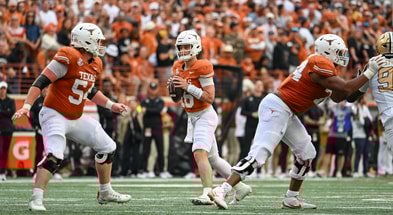
Harris joked that in his own line, it’s far more important that he keeps a talent like Arch Manning in the door than it is to add another high school recruit who taxes the team’s resources.
“It puts everything in perspective. Our process is very simple here. There’s a constant communication with our assistant coaches about where we are from a roster perspective. The front thing on our minds is retaining our players,” Harris said. “Our cornerstone pieces are really important to us. After a while of doing this, you’ve been stacking classes. Ultimately, if they walk out the door, that’s a wasted investment.”
“We want to be a program that’s made up at around 90-95% at the high school ranks,” Harris said. “What’s very difficult for us is when you tap into that market in high school and they’re asking for more money than what you pay All-American players that have played in the SEC.”
- 1

Ed Orgeron returns to LSU on Lane Kiffin's staff
- 2

Judge recused in Brendan Sorsby eligibility case
- 3
 New
NewAhmad Hardy speaks on rehab, Mizzou return after shooting
- 4

Lane Kiffin reveals NFL-like 'fine system' for players
- 5

Bryce Underwood back for Round 2
Get the On3 Top 10 Newsletter in your inbox every morning
By clicking "Subscribe to Newsletter", I agree to On3's Privacy Notice, Terms, and use of my personal information described therein.
Harris noted that the business has an ‘adapt or die’ nature to it, and a way he’s learned to adapt is through education.
“Educating the parents, educating the agents, while also educating our coaches,” Harris said. “We have a consensus in our program that we want to invest into people who love football, not what comes with the monetary things. We want to invest into really really smart kids.”
Harris noted that that doesn’t need to be school smarts, but they have to be tough football players who understand the game.
He later used Trevor Goosby as an example of this mindset, a former three-star OT who is now projected to be a top-10 pick in the 2027 NFL Draft.
“He was a three-star player coming out of high school that everyone in America didn’t want. I think he was committed to another school up the road and we really liked him because he had the measurables, and he’s a fantastic kid,” Harris said. “It’s a lot of case studies in our building where they don’t have to be ‘five star this and that’, if they have the measureables and the nuances we believe in, let’s go and invest in those guys, get them with our staff which I think is incredible with developing, and let’s see how much we can pour into those guys and get the most out of them.”
It echoes some of the sentiments we’ve seen in recent recruiting ventures for the Longhorns. The 2026 class did not feature the same depth of elite talent as the 2025 class, but they made multiple low-notoriety additions that were based on measureable data and bets on character and effort. That’s also carried over to the 2027 class, where the baseline of the class at positions like the OL have already been filled.