Steve Sarkisian gets frank about the new reality of roster building

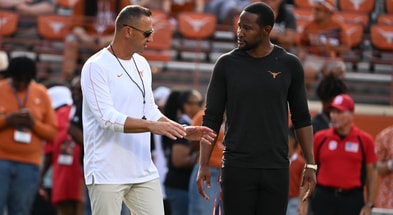
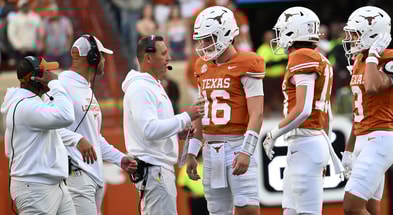
Texas football coach Steve Sarkisian was very frank recently on the “Get Got Pod” talking about the realities of modern college football with former NFL greats “Beastmode” Marshawn Lynch and Mike Robinson.
The upshot of his remarks is that with players expecting money and enjoying the benefits of a free market on their pay scales combined with limited funds to use on rosters, coaches are forced into some very difficult personnel choices. This is particularly true on the offensive line.
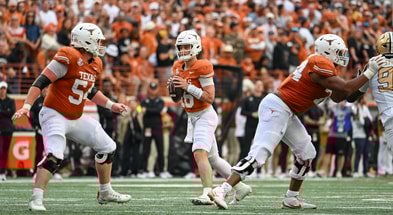
Sark noted at one point in the conversation, “The elite left tackle, you’re going to want to pay him to get him, that’s called a signing bonus, whatever it is. But that money coming out of that $20 million…to say he’s gonna go in there and start at left tackle as a true freshman…I mean he’s gotta protect that quarterback and block for that running back. In this conference? Probably not realistic. So the more money you invest in those young linemen, well that’s really dead money, because it’s a developmental position.”
Because of the rookie scale contracts, this isn’t an issue in the same way in the NFL. While it’s expensive to use high draft picks on players, at least NFL franchises still have money free under the cap while their high draft picks develop toward earning a better deal on the second contract. If they never show top money production, the NFL teams don’t have to fork over the top money. But in college football, if you spend big money on a left tackle (or potentially a defensive tackle) out of high school and then you miss? Now the money is gone and it’s hard to find other players to man those spots, much less the other positions.
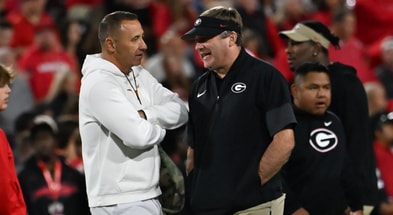
There are three obvious solutions for college football programs navigating these difficult realities. One is hinted at by Sark when he noted that Curt Cignetti just went undefeated with a horde of 24-year-old veterans at Indiana. You can save your money for “free agents.” But this is a difficult game to play at left tackle, as Sark noted going into the 2025 season. You can’t count on players like that being available in the “free agency” of college football’s transfer portal.
- 1

Ed Orgeron returns to LSU on Lane Kiffin's staff
- 2

Judge recused in Brendan Sorsby eligibility case
- 3
 New
NewAhmad Hardy speaks on rehab, Mizzou return after shooting
- 4

Lane Kiffin reveals NFL-like 'fine system' for players
- 5

Bryce Underwood back for Round 2
Get the On3 Top 10 Newsletter in your inbox every morning
By clicking "Subscribe to Newsletter", I agree to On3's Privacy Notice, Terms, and use of my personal information described therein.
Another solution is to be exceptional at picking which high school offensive tackles you invest in. There will still be “dead money” if they can’t play immediately as freshmen, but if they pan out and provide 1-2 years of high-caliber play you’re in much better shape.
The other solution is to be very good at evaluating raw prospects and developing them into good players over time. To some extent, every program needs to be good at doing exactly that for at least a few positions. It’s too expensive to get blue chips and proven transfers for every position. There needs to be some unit where you can rely on an eye for scouting and a knack for development.
In building the 2027 recruiting class, Texas is continuing to pivot toward volume and development across the roster in order to save money for blue chip talent at key positions like wide receiver, quarterback, defensive line, and left tackle. Sark is clearly thinking about the changing world of roster building at a high level and is trying to enact a plan to put Texas on a sustainable path to prolonged excellence.