Former Duquesne VP of Athletics Speaks to PSN
For over 10 years, Dave Harper served Duquesne University as its Vice President of Athletics, but now he embarks in his next adventure as Baylor’s Executive Associate AD tasked with helping manage the university’s NIL efforts.
Harper started at Duquesne in Oct. 2015 and departs the university in a decision he told PSN over the phone last week was an extremely difficult one.
The news became public knowledge Mar. 31st. Earlier on that day he met with the athletic department to tell them this news.
“What the biggest factor weighting in was the people across the board,” he explained. “My teammates, the donors that have supported us, the university administration, the Pittsburgh community, I have such an affinity for those people and for Duquesne. At times it was tear jerking.”
Harper’s transition to Baylor as comes as Duquesne also will see its president, Ken Gormley, step down from his position on Jul. 1. Gormley’s time in his role also spanned 10 years.
Replacing Harper as the interim athletic director will be John Henderson who officially began the role Monday.
Henderson has been at Duquesne for the last 10 years and forged relationships through day-to-day interactions with student-athletes and staff in general.
The exercise facility which he affectionately calls “the dungeon” is his brainchild and every sport regularly utilizes this space.
“When you’re looking at an athletic department’s executive team’s opportunities and obviously, I’m leading that team, one of those key ones is developing future leaders,” analyzed Harper. “All of the executive team developed tremendously but John by circumstance during COVID just had more exposure to the enterprise level and obviously was with men’s basketball on a daily basis, so I think it’s a smooth transition. John will be supported well, I’ll continue to support him. I told him I had his back for life and I think he’ll do an outstanding job. Hopefully he’s put in that position long term and continuity can stay with that leadership team because they are very talented people.”
In terms of challenges, Harper believes Henderson’s biggest areas will be to continue monitoring the landscape and what is going on around him.
Harper acknowledged the way NIL has been running across the landscape, and he feels it is imperative for Duquesne to find its competitive place both with current operational support and long-term sustainability.
With Gormley’s departure from the president role, Dr. David Dausey who is both the executive vice president and provost, the latter of which for the last eight years, will assume that position.
Naturally the question of how this will affect athletics has been asked and Harper believes the department is in good hands.
“I think he will be a tremendous ally,” he assured. “I think he understands the value of athletics to an institution. I think he understands how everything has to work together and I think he understands there are difficult times for all institutions. I think he understands athletics can be in a place to be successful and still be a reasonable investment and still be something donors can support and it can thrive. Duquesne will be in great hands with President Dausey and John Henderson. Hopefully I handed them the keys to a car that is running nice and shiny and all prepped to go.”
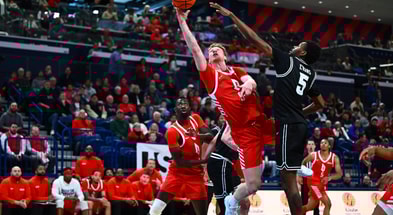
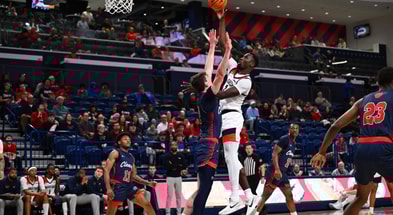
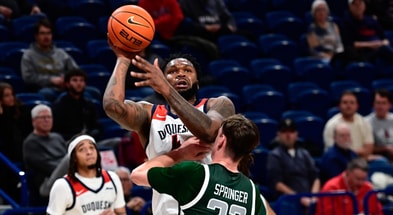
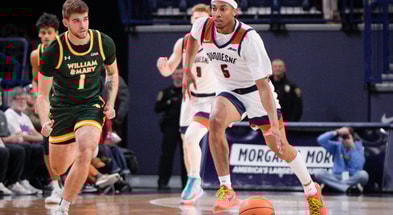
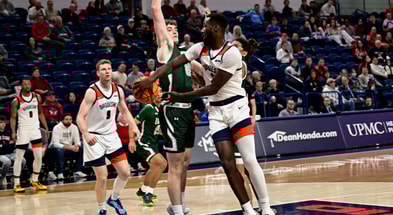
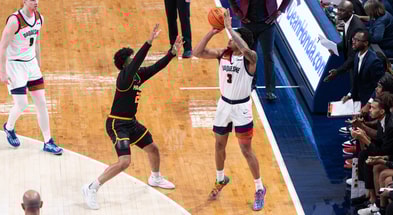
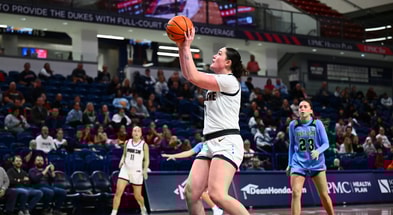
Under Harper several teams achieved success. Men’s Basketball made its first NCAA Tournament in 47 years, Women’s Basketball made its first ever tournament appearance in 2016, swimming and diving won multiple conference championships and the same for football among many others.
The UPMC Cooper Fieldhouse also got conceptualized and built despite challenges created by COVID-19 related delays.
While the building has been appreciated across the board, its decision to name the facility after Chuck Cooper has also opened a lot of doors.
“It was a game changer obviously and I think the most important thing is it symbolized who we aspire to be across the board as an institution, as a basketball program as an athletics program and it also symbolizes community,” Harper offered. “It is going to be a source for Duquesne to build lifelong relationships whether you are a fan, graduating for the first time in there, it is a home for building relational capital in the institution.”
Additionally, under Title IX, Duquesne added women’s golf, triathlon and acrobatics and tumbling to its roster of sports.
Each can be considered successful to this point, most notably acro & tumbling advancing to the national championships in its second year of competition with Lindsay Kivlan becoming the first individual national champion in any sport.
“We have amazing coaches doing amazing things and you line those programs up and they are building that list nonstop,” stated Harper. “It’s a testament to the coaches, student-athletes and we know they will be supported well in the future and continue to grow those opportunities. Duquesne will always have a Title IX challenge because of the proportionality of male and female in the undergrad population. It is one to monitor, one to think about. You’re always thinking about those issues and are mindful, but I think we have a good strategy going forward there.”
DONORS & REFLECTIONS ON TODAY’S CLIMATE
Part of Harper’s job is to connect with and establish a list of donors that will support the athletics program. It is why he believes Duquesne’s success is very attributable to the donor base, one which he believes makes it hard to top as far as the people themselves.
Spinning things forward, that relationship remains crucial moving forward.
“We had been having transparent conversations about the current realities in collegiate athletics and so to have them be part of strategy and thinking, test our plans, letting them under the tent was extremely important and will continue to be extremely important,” Harper noted. “There’s changes still coming, big issues still out there, so on an annual basis, how we strategically invest in what I will call, key transformative strategic initiatives for athletics will be paramount. To keep both the intellectual capital and financial capital from those donors is a big part of that.”
Recently two bits of news have dominated the college basketball landscape.
First, the 5-in-5 rule has been shaping up to allow student athletes to complete five seasons within five years, which would not retroactively benefit current seniors preparing to graduate. Some had entered the transfer portal with this as a potential possibility, but instead will have to shift to other opportunities.
Harper explained that good adaptive strategies for things such as this have to be planned for. Recently, roster limits were set but then changed to student-athletes already there could be grandfathered in.
“You just have those changes, we’ve been through them, they’ll go through them again and do a great job,” settled Harper. “It would be more interesting to see what happens on how the NCAA permits this from what date going forward and then to see what happens if in fact a five-year model is given and all of the student-athletes in the past are not going to be happy about it.”
Something which is definitely moving forward is the NCAA Tournament expansion to 76 teams, leading to 24 teams competing in traditional “First Four” games.
This will allow more teams the chance to compete, but as Harper explains, now the battle is on.
“I think one it’s good,” he weighed in. “Two, the battle is for the Atlantic 10 is getting one of those extra bids. It is a 2-to-3 bid league consistently is very challenging and getting to three is one heck of year. You saw where VCU may have been excluded last year, which was just ridiculous, they were definitely an NCAA Tournament team. The battle for that fringe bid is on and the A-10 and each institution has to be prepared to make sure they have all the elements in place, all the metrics in place to snatch one of those bids. I saw a mock bracket and all of those (spots) went to the power conferences, so you’re going to have to flip that script and push a team forward in there. It’s the same battle; it’s just a bigger field.”
FINAL THOUGHTS
Despite being on the phone, you could tell Harper had a clear sense of pride in seeing growth across the board, but as it relates to his administration, he mentioned in multiple instances what Duquesne has accomplished when others said it could not be done.
For him, the staff always asked what the next first was, put eyes on the prize and were unwavering. This was just the way a competitive Harper liked it, even 10-plus years later.
“I would’ve told myself be unwavering, be unflappable, monitor the landscape, stick to your plan and do great things with great people,” he posited. “I hope I did that and I hope it continues on and for everybody.”
Harper lives by his dad’s mantra of not leaving a sink full of dirty dishes, to leave it nice and clean for the next person, in this case Henderson to be ready to go.
He feels that his team did that, moved the needle and for that he was blessed to work with and have opportunities to leave them.
“It will be hard to believe but I will have three undergraduates that are going to be Duquesne grads that have a tremendous affinity for the institution,” concluded Harper. “My father grew up in Pittsburgh. Spending time there it felt like family and we’re keeping our house in Pittsburgh. We’ll have a place down here, but I was joking with some of the donors that when my working days are done, I might come back, sit courtside and tell the officials what I really think.”