“Nowhere Near Arrival”: ASU's QB race open going into the summer


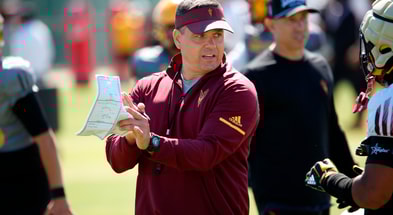
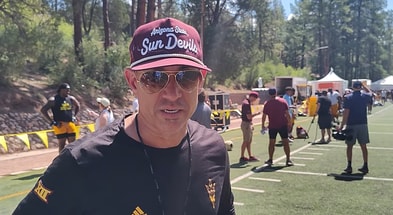
ASU offensive coordinator Marcus Arroyo isn’t pretending the quarterback competition is close to settled. If anything, his tone suggests the opposite. The structure is in place, but the separation is not.
“We got a really new room. Three, four of those guys are new into it with Cam being the guy who’s really been in it,” Arroyo said. “And so, we challenged them with a lot of reps… I thought they did a really good job.”
The “new room” will define everything going forward. With no clear starting point for 2026, ASU is in an all-out war, driven by the contrast among its four options.
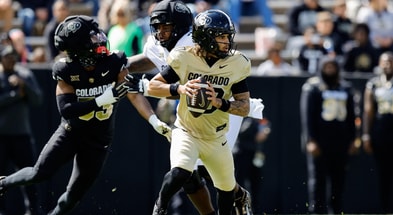
Sophomore quarterback Cutter Boley brings the highest ceiling, standing 6-foot-5 with SEC experience (over 2,000 yards and 15 touchdowns as a freshman). The tradeoff is turnover risk, including 12 interceptions last season. On the other side of that coin is senior quarterback Mikey Keene, whose profile is defined by consistency and experience, nearly 8,000 career passing yards and 65 touchdown passes, along with a level of command few in the room can match.
Redshirt Freshman quarterback Cameron Dyer adds mobility and flexibility while working back from a knee injury, and he remains the only returning quarterback with full familiarity in the system. Freshman quarterback Jake Fette represents the long-term option, a top-10 recruit who enrolled early and adjusted quickly to the college game.
Rather than narrow the field, Arroyo expanded it this spring.
“We challenged them with a multitude of mixture of combinations of the people around,” Arroyo described. “From newest guys… to Cutter… and Mikey same thing a really big vet with, over a thousand reps in college football.”
That approach highlights the real decision ahead. Boley versus Keene remains the central tension, upside against reliability, but Arroyo made clear that development and command will ultimately decide it. Early returns have been encouraging, but incomplete.
“We’re nowhere near arrival… there’s a lot of time left with these guys,” Arroyo remarked. “They’ve got a nice chunk of foundation to carry it into summer.”
Experience has already started to separate itself in subtle ways. Keene’s command, built on volume, has provided a model for the rest of the room.
“The reps are—you can’t replicate reps,” Arroyo explained. “You can’t take a thousand reps in college football and not have them be really evident… having command… is really evident.”
At the same time, growth across the room has been noticeable, particularly among younger players as they adjust to the demands of the position.
“There are so many things… the demand of college football… everything from the regimen, the time to the meetings,” Arroyo said. “For him to sit in there and continually get a little bit better each day… is really good.”
That applies to Fette’s transition, Dyer’s return from injury, and Boley’s continued push to refine decision-making. None of it has produced a frontrunner yet, and that is by design. Arroyo emphasized that competition alone is not enough. Connection matters just as much.
“I just love the way that they competed… they really connected to the team,” Arroyo remarked. “That’s a really important piece… get connected to their guys.”
For now, the room remains open, layered, and unresolved. A veteran floor, a high-end ceiling, an athletic wildcard, and a developing future all competing within the same system.
And as Arroyo made clear, the process is far from finished.
“We’re nowhere near arrival,” Arroyo said.
***
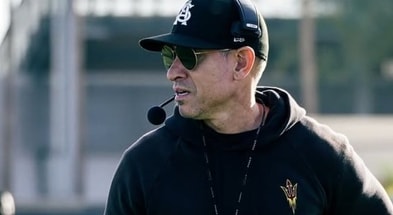
The quarterback conversation in Tempe is still less about answers and more about management, and that’s exactly how head coach Kenny Dillingham wants it heading out of spring.
“It’s a good battle,” Dillingham said. “It’s definitely going to go into fall camp. I like where we’re at. We’re not turning the ball over very much… and that’s half the battle.”
That line captures the tone of ASU’s entire quarterback situation. There is no separation, no public frontrunner, and no urgency from the staff to force one. Instead, the staff is leaning into what Dillingham repeatedly called competition, with the expectation that the real evaluation will stretch deep into fall camp.
The room itself explains why. Sophomore quarterback Cutter Boley brings raw arm talent and high-end upside, but still carries the volatility that comes with it. Senior quarterback Mikey Keene is the stabilizer, a veteran presence with thousands of collegiate reps and the clearest command of structure. Sophomore quarterback Cameron Dyer adds a different layer entirely with his mobility and athletic versatility, while Freshman quarterback Jake Fette represents the developmental piece, early in his adjustment, but already embedded in the system.
Dillingham’s approach has been to rotate all four through constant competition, emphasizing decision-making and consistency over flash. The goal, at least right now, is less about naming a starter and more about eliminating mistakes.
That emphasis showed up in how he evaluated spring as a whole.
“I think it’s the most depth we’ve had as a football team, top to bottom,” Dillingham claimed. “But I think we can get closer. I think when bad things happen, how you respond to it is based off of the connection of your team.”
That idea of connection has become the underlying theme of the program’s offseason. With so many new pieces across the roster, especially on offense, Dillingham has stressed that talent alone won’t define the season. Communication and trust will.
In the quarterback room specifically, that connection is still forming. No one has fully taken control of the offense, but no one has fallen out of it either. Even the younger players are being evaluated through growth rather than immediate production.
Dillingham pointed to that development when discussing Fette in particular.
“I’ve been really happy with how he’s progressed and his competitiveness,” he said.
That word, competitiveness, comes up often when Dillingham talks about the group. It is not just about physical traits or arm strength. It is about how each quarterback handles repetition, correction, and pressure inside a rotating system where every rep feels like an evaluation.
What has stood out most is how open the race remains. The staff has not leaned publicly toward experience or upside, even as those two forces naturally define the top of the depth chart conversation between Boley and Keene.
For now, the message is simple. The job is still being earned, not assigned, and spring was only the first step in that process.
“We have the talent,” Dillingham stated. “We’ve got to put it all together.”
***
The transition from Kentucky to ASU hasn’t just been a change of scenery for Sophomore quarterback Cutter Boley. It’s been, by his own description, something far smoother than expected, especially for a quarterback stepping into a full competition inside a completely new system.
“It’s been amazing,” Boley said. “I was just telling my family the other day how seamless the transition’s been and how smooth it’s been getting out here. I feel like I’ve known most of these guys for a long time.”
That comfort matters because Boley entered Tempe with a very specific label attached to him: the highest upside quarterback in the room, but also the most volatile. A former SEC starter at Kentucky, he arrives with over 2,000 passing yards and 15 touchdowns in his college sample, but also 12 interceptions in that same stretch, a reflection of the boom-or-bust profile that defined his early career.
Still, the early focus at ASU has not been on those numbers. It has been on adjustment, structure, and growth inside the system of Kenny Dillingham and the offensive staff continuity.
“What’s been the biggest surprise… just how good Coach Dillingham and Coach Arroyo are at their jobs,” Boley noted. “How good they are at teaching and how simple they make it to understand. I’ve already grown so much in so many areas since I’ve been here.”
That development arc is central to his position in the quarterback battle. ASU does not need Boley to simply flash arm talent. It needs him to stabilize it. His profile has always been defined by contrast: NFL-caliber physical tools paired with inconsistent decision-making, especially when plays break down.
But Boley’s own perspective this spring has leaned more toward progression than reputation. The early portion of camp, he said, was about timing and chemistry as much as anything else.
“The first few weeks, we’re kind of all getting acclimated… just getting on the field for the first time together,” he said. “But we really started to turn the corner and be like, ‘okay, we’re going to be a hell of a team for sure.’”
That “we” is important. In a quarterback room also featuring senior quarterback Mikey Keene, redshirt freshman quarterback Cameron Dyer, and freshman quarterback Jake Fette, Boley is not operating in isolation. He is competing within a structure that values consistency as much as talent, and where the evaluation is ongoing rather than defined.
The offensive identity itself is still forming, which only adds to the stakes at quarterback.
“I still feel like we’re finding exactly what that is,” Boley said. “But overall we have weapons all over the place… when you can attack people from multiple different directions, that’s going to be a great strength for us.”
That versatility around him creates opportunity, but also raises the standard. With playmakers across the roster and a staff still refining the system, execution becomes the separator.
And for Boley, that is where the entire conversation ultimately lands: not on what he has done at Kentucky, but on what he can eliminate at ASU.
The talent has never been in question. The consistency still is. But in his own words, the foundation is starting to feel right.
“It’s just been awesome to get closer with the guys and get through my first spring ball,” Boley said.
***
Senior quarterback Mikey Keene doesn’t stand out in Arizona State’s quarterback room because he’s the flashiest option. He stands out because he’s the most proven one in a group still trying to define itself.
In a competition that includes upside swings, athletic projects, and developmental pieces, Keene is the steady reference point. That role fits the résumé he brought with him to Tempe.
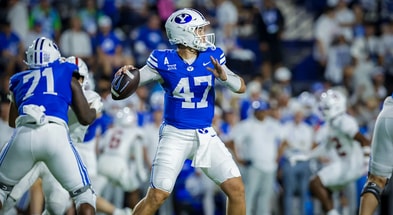
Keene arrived as the most experienced quarterback in the building, with over 7,000 passing yards and multiple seasons as a full-time starter at UCF and Fresno State. In a room still sorting out identity and consistency, that kind of volume matters.
What separates him early isn’t just experience, but how he describes applying it in a new system with new teammates.
“I feel very comfortable, obviously, figuring out guys, figuring out their strengths… Not too many weaknesses in that room, honestly,” Keene said. “But it’s just creating timing and chemistry. Talking through concepts, them understanding how we think as a quarterback room, not just as individual quarterbacks.”
That “we” shows up often. ASU’s quarterback battle isn’t built around a clear starter and backups, it’s rotation, evaluation, and constant adjustment. Keene has been central in that structure because he already understands how to operate within it.
Spring has been less about hierarchy and more about repetition, especially with so many new pieces around him.
“We did a lot of rotating this spring… ” It’s just repetitions,” Keene said. “They talk about it all the time. It’s a dark hours work that we have to get on our own as well.”
That consistency is where his value shows up. In a room that includes high-upside transfer Sophomore quarterback Cutter Boley, athletic wildcard Sophomore quarterback Cameron Dyer, and freshman quarterback Jake Fette, Keene functions as the baseline, the quarterback who keeps structure intact while everything else is still being evaluated.
That stability also fits the system built by Kenny Dillingham and Marcus Arroyo, where decision-making and clarity are prioritized as much as talent.
“Super quarterback friendly,” Keene said. “Two very quarterback-friendly guys that understand how to make it easier for a quarterback, how to get them in good plays, how to teach the game to them.”
In that environment, Keene’s edge is not that he can do the most things; it’s that he is least likely to do the wrong ones. That difference matters in a competition that may extend into fall camp, where execution often outweighs projection.
He’s also taken on a quiet leadership role within the room, helping organize communication and reinforce timing with skill players.
“Just creating timing and chemistry… them understanding how we think as a quarterback room,” Keene said.
***
The adjustment does not announce itself for an 18-year-old quarterback. It shows up in the in-between moments. A protection call that once felt foreign starts to feel natural. A coverage read that used to pause now comes through more quickly. For ASU freshman Jake Fette, that space between confusion and control has defined his spring.
Fette arrived in Tempe as one of the more highly regarded quarterbacks in his class, but early enrollment stripped away any comfort that comes with recruiting labels. Rankings don’t matter when the ball is snapped, and everything speeds up.
“Everyone’s bigger and faster out here,” Fette commented. “So just getting used to the speed of the game and then the playbook, getting out into the little things about everything you got to do, playing the quarterback, really owning the field.”
That learning curve is where young quarterbacks separate. Early on, Fette was simply trying to keep up. By the end of spring, that shifted into something more controlled.
“When you first get in, especially feels like you’re drowning in it,” Fette said. “But I’ve worked my way back up pretty well.”
That progression matters in a quarterback room defined by contrast, veterans, transfers, and developmental pieces all on different timelines. Fette’s is the longest. He is not competing for the job in 2026. He is absorbing one.
Growth has come through repetition more than anything else: practice reps, meetings, corrections, and exposure to a full college install. The biggest adjustment is not physical ability, but processing structure at speed.
“Just getting deeper into the playbook, learning the little things, when you have to move what guy, when you have to do what, depending on a defensive coverage,” Fette said.
That development is accelerated by the room around him. ASU’s quarterback group is built on layered experience, and Fette has leaned into observing how older players operate, communicate, correct, and reset after mistakes.
“Just everything to being composed at practice when I make a bad play or seeing this or that on the field. He’s just been so much of a help,” Fette said.
What stands out most is the shift in language. Less survival, more structure. Less overwhelm, more repetition. He is not near the top of the depth chart, but he is no longer outside of it mentally.
For ASU, that matters long term. For Fette, it is the gap between being recruited and being developed.
“Everyone’s bigger and faster out here,” Fette said. “So just getting used to the speed of the game and then the playbook, getting out into the little things about everything you got to do, playing the quarterback, really owning the field.”
***
In a quarterback room where every rep is earned and nothing is guaranteed, ASU’s sophomore quarterback, Cameron Dyer, is still working his way back to full speed after a knee injury that interrupted his early development. For a player whose game has always leaned on athletic movement and instinct, the setback didn’t just pause his progress, it reshaped how he had to approach it.
This spring has been less about learning the system and more about finally living inside it again. Healthy, active, and fully involved in competition for the first time in a while, Dyer has been trying to turn availability into momentum.
“I think it’s been great. When I got here, that’s all I looked towards, getting the opportunity to have a full offseason,” Dyer said. “Just coming to work every day and being able to do so without the injury has been a blessing.”
That contrast between where he was and where he is now has defined his growth. Coming off a knee injury, even basic movement in the pocket had to be rebuilt. The speed of the game, the timing of decisions, and the trust in his own body all had to catch up again.
That climb has been gradual, but noticeable inside the building. Coaches have emphasized his athletic value in certain packages, but the larger focus has been whether he can pair that with consistent passing execution. The knee injury slowed that evaluation, but it also forced him into a different kind of learning role while recovering.
“Once I came off my injury, it’s the same game but at a different level, and you really feel that,” Dyer said. “I think my growth has been in things like my pocket presence and decision-making. The game just comes easier to me now.”
Now, instead of watching from the sidelines, he is stacking live reps again, rotating through a quarterback room that includes veterans and higher-profile competition. That dynamic has made communication and shared learning a key part of his development.
“Being able to get images from guys and seeing reps from last year has been big for me,” Dyer said of players like Jeff Sims and Sam Leavitt. “Just being able to digest that film and understand it has helped a lot.”
The task for Dyer isn’t simply getting back into form; it’s taking his game beyond the level he was at before his injury. He has always been known for his ability to be on the move; now, it will take him being able to produce sustained drive with his arm in some sort of structured system rather than using his scrambling ability or acting as an occasional change of pace option.
Although he isn’t currently viewed as a strong contender among those competing for the starting position, Dyer is still one of the most unique assets within this group from a physical standpoint due to the added dimensions he brings. It remains to be seen whether that uniqueness translates into increased usage or simply into situational use.
For Dyer, the focus stays simple: get healthy, stay on the field, and keep stacking reps.
“There’s a lot of pressure on what’s to come next, but my dad always tells me pressure is what you make it,” Dyer said.