Everything Nate Oats said about the Charles Bediako situation before Tennessee

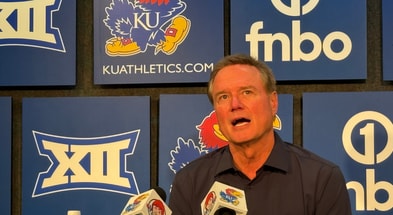
Alabama head coach Nate Oats addressed the Charles Bediako situation publicly for the first time on Friday, giving his thoughts on the temporary restraining order that made the big man eligible to play while his case works its way through the court system.
Everything he said about the situation is below.
Opening statement:
“First of all, the system’s clearly broken. And I’m all for figuring out a way to fix it. But since the NCAA has already allowed professionals to play — virtually every team we’ve played this year or will play has a former professional player on their roster. You tell me how I’m supposed to tell Charles and the team that we’re not going to support them when he’s been deemed legally eligible to play. So Charles is still within his five year window. He’s 23 years old. He’s pursuing his degree here at Alabama. We’ve got a roster spot open, so this is not taking an opportunity away from a high school recruit or anybody else. Charles shouldn’t be punished for choosing to go the academic route out of high school rather than the professional route like the international players did. So again, my personal opinion on all of this is we need a uniform and transparent system that doesn’t punish the Americans, that takes the hypocrisy out of it, that gives equal treatment to Americans and internationals both, while also allowing high school players the opportunities they need coming out of school. Someone should be able to come up with a system that checks all those boxes. But for now we’re going to continue to support Charles, our team, and we’re working closely with our administration and our compliance department on all of this. So that’s what I’ve got on that.”
“We are planning to play him. He’s eligible to play. We’re going to follow the court orders.”
On his reaction to the various public opinions made by coaches:
“I’ve said this before, I take social media off my phone for the whole season. Really doesn’t do anything but distract me from doing my job. And people have forwarded me some stuff — like you know — I got friends that are fans and my staff doesn’t all take it off because they have to deal with recruiting a lot more and all that. So I’ve been sent some stuff. Everybody’s going to have their opinions. I respect them. I’m focused on our team and what we need to do to get better and that’s where I’m going to keep my focus. I think focusing on all that other stuff distracts me from doing my job.”
On what made him comfortable adding Bediako:
“Yeah I think — to me it makes sense. The James Nnaji situation is what really kind of put it over the edge in my opinion. You’re kind of watching as all these things go and these European players are — there’s some guys that played four years in the second best league in the world. The EuroLeague is the second best league in the world. NBA then EuroLeague… You see all these players in the EuroLeague coming over and being eligible to play. Well they’re pros. They’re professionals playing in the second best league in the world behind the NBA. So then you see a guy like James Nnaji, and Charles actually sat right next to Nnaji at the draft that year. And Nnaji goes 31st in the draft, plays three years in Europe, gets declared eligible with four years of eligibility at Baylor. It kind of made Charles and his camp and us — and we both had mutual interest. It seemed like it made a lot of sense. If a guy that actually got drafted in the draft is eligible to play four years, and Charles is still in his five year window, lets pursue it. I assumed the NCAA would deem him eligible. They didn’t. The court system deemed him eligible and were going forward with what’s happened so far.”
On how the rest of the team has reacted:
“So they’re great. I wouldn’t bring a guy that wasn’t high character into the team, and I think we have a team full of high character guys. And we got a need for [Bediako]. We assumed Collins [Onyejiaka] was going to be able to play this year and he’s had the heart condition all year. Doesn’t look like he’s going to be able to play this year. Keitenn [Bristow] has been playing backup five, some four. He’s come across injuries. I don’t know when he’ll play again. Taylor [Bol Bowen] has been in and out. We were thin in the frontcourt after Collins went out to begin with. Our players are trying to win. Their goals are high. Charles is going to contribute to them winning, and he’s a great guy. He’s been an unbelievable teammate. Every kid that played with him in his two years here loved playing with him. He’s been welcomed in. And Charles was here when some of those kids came on visits and they know him from then. Charles has been around. He was here last year — when they played in Birmingham last week, he came down with their coaches and watched practice. He’s been around, and I stay in touch with all my former players, so I’ve continued to talk to them through the years. And I love having our guys come back, so he’s been a guy that’s been around and they’re pretty comfortable with him.
“And shoot, he fits in great in practice today. We can play him and Aiden Sherrell together. Sherrell spaces the floor really well, can play some four. There’s a lot of teams in our league that play two bigs… I think it helps everybody out and they’re all thankful for a guy to help us win more games.”
On if this is good for the sport:
“Like I said, we’ve got to come up with a uniform and transparent system that doesn’t give preferential treatment to international players like the current system does. Because those guys can play four years professionally and then come here. So is it good for the sport? I mean at some point we’ve got to get it to where everybody’s got a uniform transparent — we all know who we can recruit and who we can’t recruit — that doesn’t give preferential treatment to international players. And once we figure that out, it’ll be great. So if this helps them get to that point, that’s great. But they need to get to that point.”
On if there’s any worry about potential NCAA punishment:
“No. None. We’ve been in constant contact with our administration and compliance. There’s no concern with that.”
On the initial conversations between him and Charles:
“We’ve been seeing similar cases around the country this season — former pros who are now in college. I mean, UConn’s got multiple ones. BYU. Go down the list. Virtually everybody we’ve had. Louisville recruited the kid out of the G League that made a lot more money than Charles did. So when all those were happening and then the Nnaji one, it was like, and again, Charles has been down here. We’ve talked frequently and I knew that he — I think he sat two rows from Charles at that draft where Nnaji got drafted. Then we started talking. How does Nnaji get drafted, play three years in the second best basketball league in the world and come back to play? Well, Charles made a mistake when he stayed in. And again, the NIL money when Charles left is not near what it is now. So he knew it was a better situation. There’s a lot of players right now trying to leave the G League and come back to college. College is a much better system for kids the age of Charles and those kids that are leaving that. So we talked, his people found some attorneys that agreed with him that he should be eligible. He went through the process with the NCAA, then the legal process, and we’re now here where we’re at.”
On if he views Bediako’s case as a landmark case:
“I think it’s more like one degree of separation. I know they’re trying to make a differentiation between Charles and some other cases. But I’m not sure how you tell a guy that’s played four years in the EuroLeague, which is a lot higher level than the G League, that he’s eligible to come. And because Charles chose to go to an academic institution to start with and the other players chose to go the professional route, Charles is going to get punished. Really what it does is give very preferential treatment to the international players and penalizes American players for choosing to go academic. And we are in the NCAA, which is a conglomeration of academic institutions. We should not be punishing American kids that go to American high schools that then go to colleges from being able to come back to pursue their degree and play in college, and giving preferential treatment to international players. So I think it’s just one more line in making sure that it’s equal treatment between Americans and international players. I don’t think it’s some landmark case. If some other people want to view it as that, they can, but that’s not at all how we viewed it. We didn’t think it was really any different than a lot of the other professional players that are currently playing college basketball right now.”
On what Bediako will bring:
“Obviously, we haven’t had him here in practice a lot this week. But based on what he did here in the past, I obviously give shot blocking, rebounding, lob target. I think our guards like playing with him in practice. He can go get some lobs. As far as his development goes, it’s hard for me to see. He’s really good at the stuff that we used him with when he was here, and he was here not that long ago. I mean shoot, he was a sophomore and Nick Pringle was a junior that year. Nick Pringle’s still playing in the SEC, so Pringle’s been in college longer than Charles. That’s where some people got to understand, he’s in his five-year window and he’s 23-years-old. He was here not that long ago. And when he was here, he was an elite rim protector, very good post defender, rebounder, very good lob target. I think his game has continued to develop and we’ll try to use some of the stuff he’s developed. But right now I’m just trying to get him used to playing with the players we have. It was a lot easier for him to come back because he’s been in our system… We ran an NBA system when Charles was here. Charles has played some G League teams that play an NBA system, he’s back playing an NBA system. So it’s not as big as an adjustment as maybe some of these other guys.”
On the timeline of adding him:
“I think our eyes got opened with the James Nnaji ruling. I think that was kind of one — I think people had become accustomed to the international players coming, even though I always thought in my head, ‘Why are these international pros eligible to play in college but a G League pro is not?’ I’ve always kind of questioned that. But I think once a guy that got drafted in the same draft that Charles was in, that played three years in the second best league in the world the EuroLeague, was now able to come back to college, it kind of opened things up. So it started then. We had some mutual conversations. Charles and his camp were able to get some attorneys that agreed with Charles believing he should be able to come back to college based on what the NCAA had allowed up to that point. And then Charles wanted to get his degree. He re-enrolled in school. He’s been in class since we started class the first day of second semester and he’s been working toward finishing up his classes. And yeah, he was in town last weekend, but this has been well going along before that… We talked to the G League people with the Pistons and worked through all what he needed to do to get out of the G League and back into college. Once he was able, once he got the temporary restraining order, he was eligible to play. So it’s been going on since right around the James Nnaji ruling, shortly after that they’ve been working on it.”
Tennessee and Alabama will tipoff tomorrow in Tuscaloosa at 8:30 p.m. ET.
Subscribe to The Field of 68 on YouTube
Subscribe to The Field of 68’s Daily Newsletter