Wisconsin's Piling Losses Are Raising Serious Roster Concerns

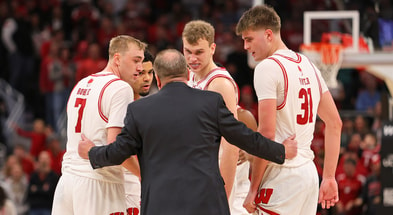
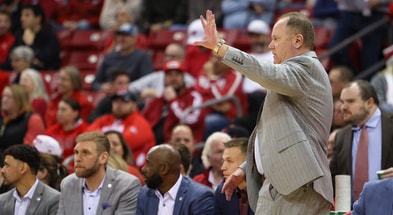
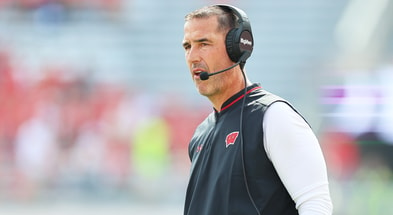
MADISON, Wis. — Following the Badgers’ 89-73 home loss to Purdue, Greg Gard gauged where his team was at throughout a game that fell apart in the second. In a way, it reflects the overall season.
“We’re this close, but when you’re inconsistent, like I told [the team], we do a lot of good things early,” Gard said. “I thought we did a lot of good things. We were at the rim, we were scoring in the paint…
“We were there for 15 minutes, and then we’re this far away for another 20, 25. It’s a matter of getting everybody at a higher level all the time.”
The first four games of Wisconsin’s season were full of positives, particularly on the offensive end. At 4-0, it looked like the Badgers’ three-point-heavy system would pay off and reflect the historic success of last season. However, when they faced tougher competition, it only brought more flaws to light.
After the Purdue loss, Wisconsin is 3-5 against Power Five opponents. With a 9-5 record (1-2 in the Big Ten), the odds of a team that started in the AP Top 25 making the NCAA Tournament have been cut dramatically. The Badgers are without a Quad 1 win (0-4) to start 2026, and are 1-1 in Quad 2 games.
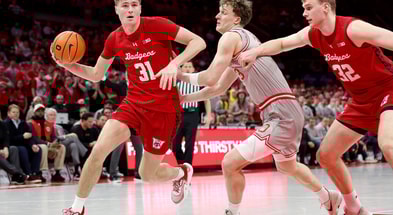
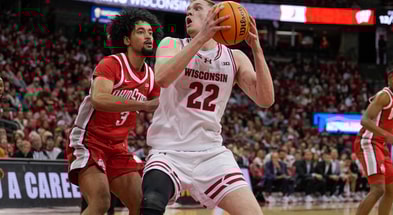
But the weaknesses are clear when watching the last 14 games. Before the season started, major concerns with the rotation were defense and a paint presence. Although the team boasts floor spacers such as Nolan Winter, Austin Rapp and Aleksas Bieliauskas, they all seem to be different variants of the same style.
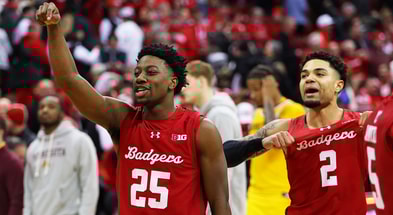
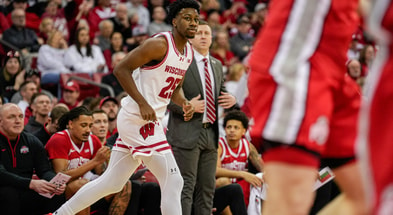
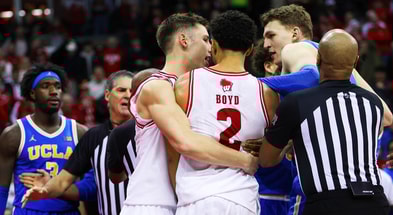
The perimeter has been mostly impressive. Nick Boyd is clearly the best offensive weapon, averaging 19.5 points per game, and while John Blackwell has been inconsistent in terms of aggression and production, the junior guard is still putting up 17.5 points on 37.6% shooting from three. His biggest struggles have unfortunately come in high-stakes games.
It’s great that Gard reloaded this summer with talented offensive weapons, but the team lacks any separation in terms of individual roles. It’s a big reason why the Badgers are giving up 82.4 points per game against Power Five opponents.
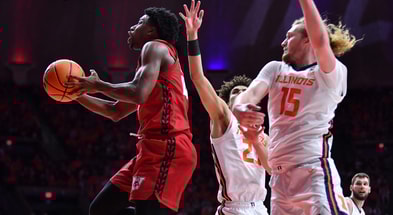
More specifically, in those matchups, they’ve given up an average of 10.3 offensive boards and 34 points in the paint. The turnovers have been a glaring issue as well, with Wisconsin averaging 11.8 across those eight games.
The statistics against lesser competition will help mitigate the overall problem on the surface, but those eight matchups matter a whole lot more than those against a Central Michigan or UW-Milwaukee.
It points to the way the roster was constructed this offseason. The Badgers got better in the shooting department with five floor spacers. But they gave up what gets teams far in March: ball stoppage and bruisers. Outside of Boyd and Blackwell being shot creators, they don’t have players who can handle specific roles.
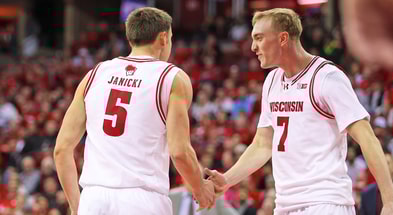
Wisconsin will need to get more out of guys like Andrew Rohde and Jack Janicki, who have potential as high-level defenders and ball handlers. The Badgers still lack a particularly scrappy or versatile ball stopper. It’s a big reason why, in their losses, between four and five players hit double figures. The opponent’s leading scorer averages nearly 20 points per game (19.8).
There is still plenty of time to salvage what has been a disappointing season, but the road only gets tougher. Nine of Wisconsin’s final 17 games are on the road, while six are against AP Top 25 teams. With deficiencies on defense and in the frontcourt, things could go south for the Badgers if adjustments aren’t made.