One upset win says it all: Win over Kansas mirrors Hurley's 11-year ASU tenure


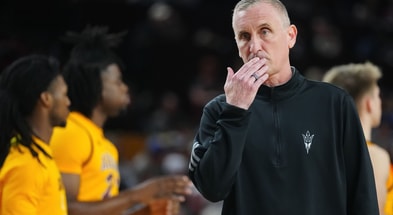
Bobby Hurley has always lived in the improbable.
When he arrived in Tempe a decade ago, he stepped into a program searching for itself, drifting between promise and irrelevance, craving something steady to believe in. There have been NCAA tournament appearances, 20-win seasons, and guards who went on to the NBA. But Hurley’s imprint has never been confined to banners or brackets. His legacy has been culture.
Under Hurley, ASU has been defined by court intelligence and defensive edge, by guards who see the floor two passes ahead and lead just as loudly in the locker room as they do in crunch time. His teams reflect him: intense, stubborn, and unafraid of the moment. They compete when undermanned. They scrap when overlooked.
So 2025-26 felt familiar.
The Sun Devils entered the season picked last in the Big 12 preseason poll, an afterthought in what may be the country’s deepest conference. Around them were rosters stacked with future draft picks and national buzz. Hurley’s group was different. Lesser-known names. Transfers searching for stability. Players with something to prove.
It mirrored his tenure. Expectations low. Pressure high.
For a program built on resisting the script, there was poetry in it. And if this becomes Hurley’s final home game at Desert Financial Arena, it arrives the only way his era ever could: doubted, discounted and daring to surprise.
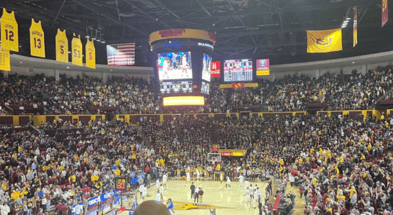
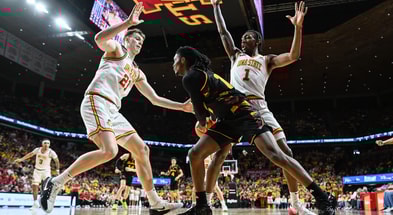
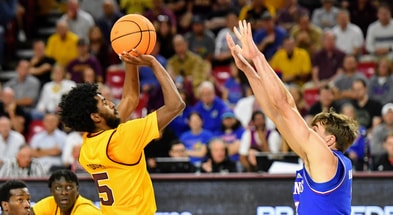
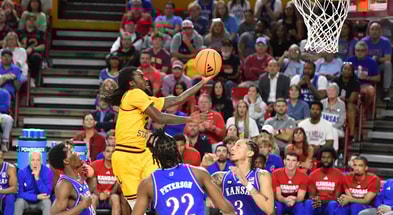
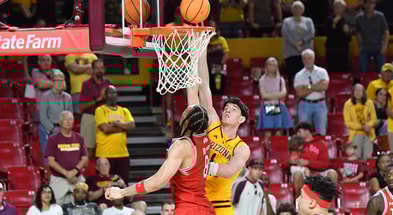
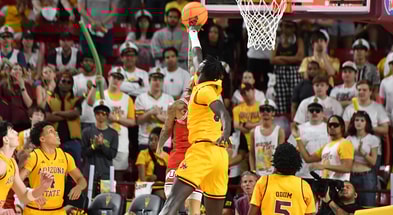
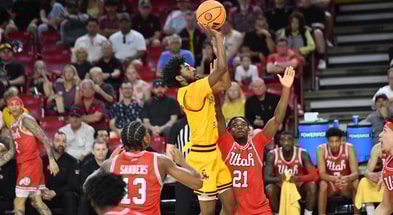
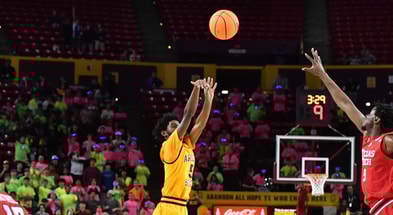
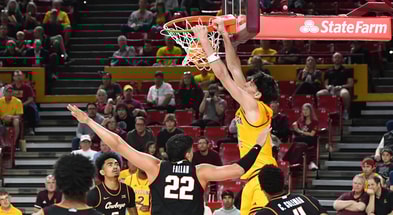
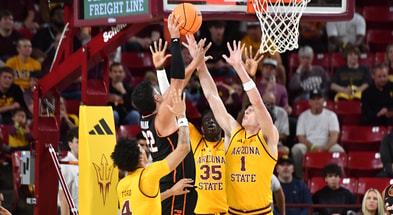
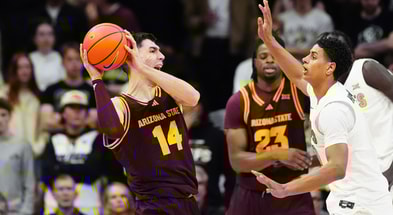
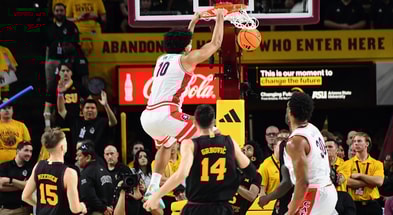
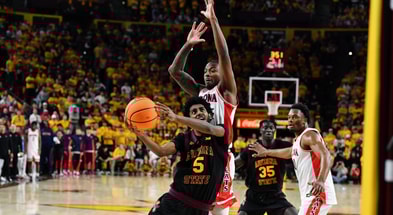
Tuesday night unfolded almost too perfectly. In came No. 14 Kansas, a traditional blue blood with a potential top-three pick in freshman guard Darryn Peterson. Across from him stood Hurley’s roster of junior college transfers and overseas signees, bound less by recruiting rankings than by a shared edge. ASU out-hustled, out-worked, and out-coached the Jayhawks, grinding out a 70-60 victory that felt symbolic. The opponent, the stage, the style. It was a snapshot of Hurley’s tenure distilled into 40 minutes.
Even before tipoff, the emotions were building, a mix of senior night sentiment and the weight of facing an old rival.
“I always feel this enormous emotion with the seniors and the last game,” Hurley said. “And then just this opponent and the history I’ve had as a player and coach with Kansas… very ironic and very, very weird day.”
That blend of sentiment and history isn’t surprising. When Hurley first took the job, his pedigree was unquestioned. Long before his brother, Dan Hurley, won back-to-back national titles at UConn, Bobby had already set the family standard. A two-time national champion point guard at Duke, a first-round NBA draft pick, and a disciple of Mike Krzyzewski, he knew exactly what elite basketball demanded, and what it takes to build a program from the ground up.
He proved it at Buffalo, leading the program to its first NCAA tournament victory in 2015 and showing he could guide an underdog through a breakthrough.
Since arriving at ASU in 2015, Hurley has pushed the program back onto the national stage. Three NCAA tournament appearances. Consecutive bids in 2018 and 2019 for the first time since the 1960s. Four 20-win seasons. Signature upsets, including Kansas (again), that punctuate his tenure.
More than the resume lines, he established an identity. Guard play became the program’s heartbeat. Leaders who commanded the floor with skill and authority. Competitors who embraced responsibility. If this were the end, it would be fitting for Hurley to ensure those guards were remembered. They built this era as much as he did.
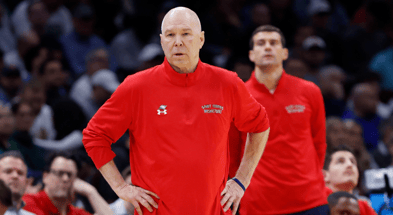
Hurley stepped onto the court tonight in a “Guard U” hoodie, a deliberate nod to the players who helped build this program from the ground up.
“I just wanted to think about those types of players as I coached the game,” Hurley said. “Guys like Shannon Evans, Trey Holder, and Kodi Justice, the three guys that really jump-started relevancy for this program, getting it to number three in the country. Those guys are so important to me.”
The path has not been smooth. Consistency proved elusive. Expectations, when elevated, were not always met. Some rosters never fully meshed. The transition from the Pac-12 to the Big 12 brought another layer of difficulty. Recruiting wins did not always translate into sustained success.
Yet the culture held.
Turn on the television any year, and the traits were recognizable. Preparation. Accountability. Resilience. A refusal to concede the fight. Those standards kept ASU competitive regardless of the talent gap. That same spirit defines Hurley’s 2026 team.
“These kids care about the game, they want to play the right way,” Hurley said. “A lot of them are underdogs, like I always was… and they’ve never given up.”
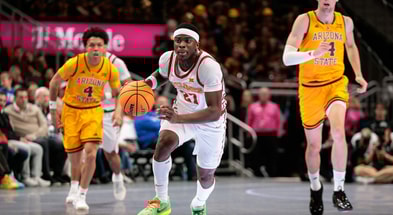
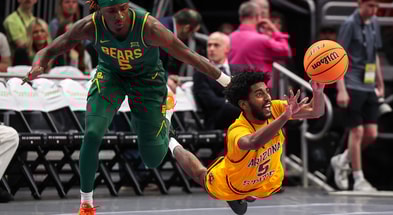
The Kansas win was emblematic. ASU shot 32.2 percent from the field and still controlled the game by holding the Jayhawks to 29.2 percent. It forced 17 turnovers and converted them into 18 points. Kansas grabbed 25 offensive rebounds but managed just six second-chance points. Every loose ball was contested. Every possession carried weight.
It was not pretty. It was stubborn. It was Hurley.
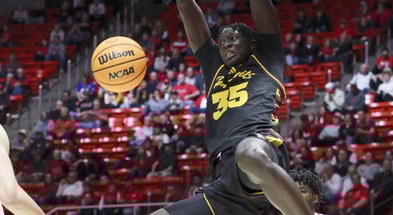
The performance of senior guard Moe Odum sharpened the contrast. Peterson arrived as a 19-point-per-game scorer and future lottery pick who received his first Division I offer in eighth grade. Odum’s path was quieter. He began at Pacific in Stockton, California, spent two seasons grinding for minutes, transferred to Pepperdine, and only later earned his shot at a power conference program.
Different journeys. Same stage.
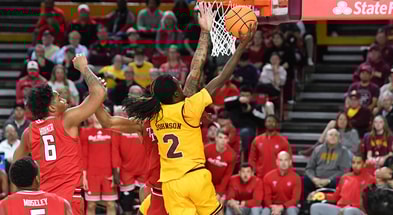
Behind Hurley’s system, Odum dictated the game. He scored 23 points, hit five 3-pointers, dished six assists, and collected three steals, leading the team in each category. By contrast, Kansas freshman Darryn Peterson managed just 15 points on 3-of-18 shooting, frustrated all night by Odum and senior guard Anthony Johnson’s relentless pressure.
When the final horn sounded and the crowd rushed the floor, Odum was lifted into the air. It was a moment years in the making and a reflection of the type of guard Hurley trusts most. Tough. Overlooked. Unflinching.
To Odum, Hurley has meant everything.
“People don’t know what me and Hurley talk about,” Odum said. “He’d get in his dark places, and I’d text him the next day, like, ‘Stay with us, coach. We’re not giving up.’ I feel like that really meant a lot to him, and he really meant a lot to me. He is the greatest coach that’s ever coached me, and I’m going to war with him anytime… Without Hurley, there’s no us.”
The broader question now turns to legacy.
Has Hurley raised ASU’s ceiling? The results are complex. The tournament appearances and win totals may appear modest in isolation. But before his arrival, the program drifted. Today it owns an identity. It carries expectations. It believes it belongs.
For all the uncertainty surrounding his future in Tempe, Tuesday’s victory stands as a testament to what he built. Intelligent, guard-driven basketball. A culture where the underestimated can thrive.
Whether he stays or moves on, the imprint is unmistakable.
Yet Hurley’s focus remains on the present, not his own legacy. He’s concerned with what’s best for the team that has given him everything.
“All day, I’ve just been thinking of the meaning of winning this game, to continue to gain confidence. You never know what could happen,” Hurley said. “Every time you match up with someone, it’s a huge opportunity. That’s how I’ve been approaching it.”